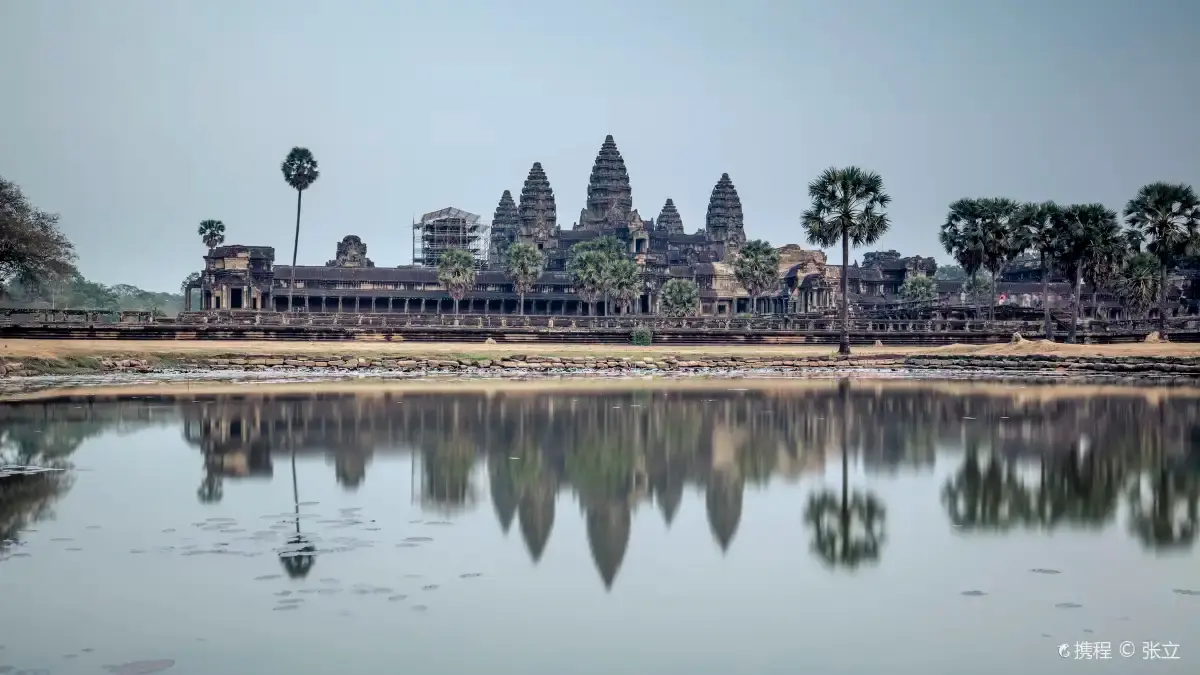
Imagine this: The sky is still pitch black. A gentle breeze sweeps across the lotus-filled moat as you stand in the quiet darkness. Slowly, the horizon bleeds into shades of violet, orange, and gold, revealing the silhouette of five majestic lotus towers.
Welcome to Angkor Wat.
For many travelers, witnessing the sunrise over the largest religious monument in the world is a bucket-list dream. However, the sheer scale of the Angkor Archaeological Park can be incredibly overwhelming for a first-time visitor. With over 1,000 temples scattered across 400 square kilometers of Cambodian jungle, how do you plan the perfect trip?
This guide covers absolutely everything you need to know—from ticket hacks and dress codes to the best itineraries and survival tips. Let’s dive into your ultimate first-timer’s guide to Siem Reap! 🇰🇭✨
🏛️ What is Angkor Wat? (A Quick History Lesson)
Before you start exploring, it is crucial to understand a common misconception: Angkor Wat is not the entire park; it is just one (albeit the most famous) temple within the massive Angkor Archaeological Park.
- 🧱 The Scale: Spanning 162.6 hectares (over 400 acres), Angkor Wat holds the Guinness World Record for the largest religious structure ever built.
- 🕉️ The Origins: It was constructed in the early 12th century by the Khmer King Suryavarman II. Unlike most Angkorian temples that face east, Angkor Wat uniquely faces west, leading scholars to believe it was also intended as the King’s funerary temple.
- 🔄 Religious Evolution: Originally dedicated to the Hindu god Vishnu and designed to represent Mount Meru (the home of the gods in Hindu mythology), it gradually transformed into a Buddhist temple towards the end of the 12th century. It remains a deeply sacred, active place of worship today.
🗓️ When is the Best Time to Visit?
Cambodia has a tropical monsoon climate, meaning your timing will drastically affect your experience.
🌤️ The Seasons
- Peak Season (November to March): 🏆 The Best Time. The weather is dry and relatively cool (20°C – 30°C / 68°F – 86°F). However, this is also when the temples are at their most crowded, and hotel prices peak.
- The Hot Season (April to May): 🥵 The Toughest Time. Temperatures regularly soar above 35°C (95°F) with high humidity. Exploring stone ovens under the midday sun can be exhausting and dangerous.
- The Green/Wet Season (June to October): 🌧️ The Photographer’s Dream. You will encounter short, heavy afternoon downpours, but the moats are full, the jungle is a vibrant emerald green, and the crowds are thin. The wet stones also make the intricate carvings pop in photographs!
⏰ The Best Time of Day
- 5:00 AM – 8:00 AM: 🌅 Beat the heat and the massive tour buses. The morning light is spectacular for photography.
- 12:00 PM – 2:00 PM: 🍜 Lunch & Siesta. The sun is punishing. Do as the locals do: retreat to Siem Reap town for a long lunch, a foot massage, or a swim in your hotel pool.
- 3:00 PM – 5:30 PM: 🌇 Golden hour returns. The warm light illuminates the bas-reliefs beautifully, and many tour groups have already left.
🎟️ Demystifying the Angkor Pass (Tickets & Prices)
You cannot buy a ticket at the gate of Angkor Wat itself. You must purchase an Angkor Pass at the official Angkor Enterprise ticket center, located on the road between Siem Reap town and the park.
💰 Current Ticket Prices (USD)
- 1-Day Pass: $37
- 3-Day Pass: $62 (Valid for 10 days from the issue date)
- 7-Day Pass: $72 (Valid for one month from the issue date)
- Note: Children under 12 enter for free (bring their passports as proof).
💡 First-Timer Pro-Tip: Buy Your Ticket the Day Before!
If you want to catch the sunrise (which starts around 5:00 AM), do not buy your ticket on the morning of your visit. The ticket center opens at 4:30 AM, and the lines can be massive.
- The Hack: Go to the ticket center anytime after 4:45 PM the day before. You will buy your pass, get your photo taken for the digital ID, and the ticket will not start counting its valid days until the actual next morning. You can even use that same afternoon to catch a sunset at a hilltop temple like Phnom Bakheng for free!
🛺 How to Get Around the Temple Complex
The park is enormous. Walking the entire circuit is impossible. Here are your best transportation options:
1. The Classic Tuk-Tuk 🛺 (Highly Recommended)
Hiring a local tuk-tuk driver is the most popular and authentic way to explore.
- Cost: $15 – $25 per day (depending on the circuit and negotiation skills).
- Perks: Your driver waits for you in the shade while you explore. They act as a secure base for your belongings and often provide cold water and wet towels.
- Tip: Ask your hotel to arrange a reliable driver, or negotiate one on the street and get their WhatsApp/phone number for the next day.
2. E-Bikes and Bicycles 🚲
- Cost: $5 – $10 per day.
- Perks: Ultimate freedom to explore at your own pace and take hidden dirt paths.
- Warning: The distances between temples are vast (10km+). Cycling under the midday Cambodian sun is a recipe for heatstroke. Only attempt this if you are fit and start extremely early.
3. Private Air-Conditioned Car 🚙
- Cost: $40 – $60+ per day.
- Perks: Essential for families with young children, elderly travelers, or those visiting during the brutal heat of April/May.
🗺️ The Ultimate Angkor Itineraries
🟢 The Small Circuit (Perfect for a 1-Day or 2-Day Pass)
This route covers the absolute “must-see” heavyweights.
- Angkor Wat: Spend at least 2.5 hours exploring the bas-reliefs and climbing the central towers.
- Angkor Thom & The Bayon: Enter the ancient walled city through the South Gate. The Bayon is famous for its 216 massive, serene, smiling stone faces looking out in all directions.
- Baphuon & The Terrace of the Elephants: Explore the royal grounds of ancient kings.
- Ta Prohm: 🌳 Famous as the “Tomb Raider” temple. Massive silk-cotton tree roots spill over the stone ruins, creating a dramatic, jungle-swallowed atmosphere.
🔵 The Grand Circuit (Perfect for a 3-Day Pass)
If you have more time, escape the crowds of the Small Circuit and see the architectural evolution of the Khmer Empire.
- Preah Khan: A sprawling, maze-like Buddhist monastery that feels like a hidden ruin.
- Neak Pean: A unique island temple situated in the middle of a massive reservoir, designed for ancient healing and purification rituals.
- Ta Som: A smaller, quieter temple with a spectacular gateway completely engulfed by a single, massive fig tree root.
- Pre Rup: A towering temple-mountain that offers one of the best sunset views in the entire park.
🌅 Chasing the Sunrise: A Survival Guide
Witnessing the sunrise at Angkor Wat is magical, but it requires strategy.
- Arrive Early: Get to the temple gates by 5:00 AM. You will need a flashlight or your phone’s torch to navigate the dark, uneven stone paths.
- Where to Stand: Walk past the main entrance and head toward the Left Reflection Pond (North Pond). It usually offers a slightly better angle and fewer crowds than the right pond.
- Secure Your Spot: Tripods are generally frowned upon in crowded areas, but a small travel tripod can help. Once the sun rises, the crowd will immediately rush into the temple. Stay by the pond for 20 minutes after sunrise to take photos without people in the background!
👗 Angkor Wat Dress Code & Temple Etiquette
Angkor Wat is a sacred religious site, and the local authorities enforce a strict dress code. If you do not dress appropriately, you will be denied entry to the upper levels of the temples.
✅ What to Wear:
- Shoulders Covered: T-shirts, blouses, or shirts with sleeves.
- Knees Covered: Long pants, maxi skirts, or dresses that fall below the knee.
- Footwear: Comfortable, slip-on shoes or sturdy sandals. You will be taking your shoes off if you climb to the highest tier (the Bakan) of Angkor Wat.
❌ What NOT to Wear:
- Tank tops, spaghetti straps, or crop tops.
- Short shorts, miniskirts, or leggings worn as pants.
- Note: Throwing a sheer scarf over your shoulders does NOT count as covering them. Guards will turn you away.
🙏 Respectful Etiquette:
- Don’t touch the carvings: The oils from your skin degrade the ancient sandstone.
- Don’t sit on Buddha statues or altars: This is highly disrespectful.
- Keep your voice down: Monks often come to pray here, and it is a place of quiet reflection.
🎒 Essential Packing List for Temple Hopping
Do not rely on buying things inside the park; prices are inflated and options are limited. Pack a day-bag with:
- 💧 Hydration: At least 2 liters of water per person. Add electrolyte tablets to prevent heat exhaustion.
- 🧢 Sun Protection: A wide-brimmed hat, high-SPF sunscreen, and UV-blocking sunglasses.
- 🦟 Insect Repellent: The jungle temples (especially Ta Prohm) are notorious for mosquitoes.
- 🔋 Power Bank: You will be taking hundreds of photos; don’t let your phone die by 10 AM.
- 🧻 Tissues & Wet Wipes: Essential for bathroom breaks and wiping off the sweat and red dust.
- 🩹 Band-Aids: For unexpected blisters from walking 15,000+ steps on uneven stone.
⚠️ Health, Safety, and Practical Tips
🐒 Beware of the Macaques
You will see hundreds of monkeys around Angkor Thom and the Bayon. Do not feed them, do not smile showing your teeth (they view this as aggression), and keep a tight grip on your bags, sunglasses, and water bottles. They are expert thieves and will snatch items right out of your hands.
🚻 Bathroom Facilities
There are no bathrooms inside the ancient temples. Clean, public restroom facilities are located at the main ticket center, the Angkor Wat entrance, and near major food stall areas (like the restaurants opposite Ta Prohm). Always carry your own toilet paper just in case.
🥘 Food and Drink
There are dozens of local restaurants located directly across the street from Angkor Wat and Ta Prohm. While slightly more expensive than in town, they offer a welcome break for lunch, cold coconuts, and iced coffees.
🛏️ Where to Stay in Siem Reap
Siem Reap is the gateway town to the temples, located just 15-20 minutes away from the park entrance.
- Old Market / Pub Street Area: 🍻 Best for backpackers, nightlife lovers, and those who want hundreds of restaurants and massage parlors within walking distance. (Can be noisy at night).
- Sivutha Boulevard / Wat Bo Area: 🌿 The sweet spot. Boutique hotels, great local cafes, quiet streets, but still only a 10-minute walk to the action.
- Riverside / Countryside: 🌾 Best for luxury travelers and those seeking absolute peace, spas, and resort-style pools after a long day of temple hopping.
❓ Frequently Asked Questions (FAQs)
Q: Do I need to hire a tour guide for Angkor Wat? A: While not legally required, it is highly recommended. The temples are essentially giant stone puzzles. Without a guide, you are just looking at pretty rocks. A licensed guide will bring the Hindu epics, the Khmer history, and the hidden meanings of the carvings to life.
Q: Can I fly a drone at Angkor Wat? A: NO. 🚁 Drones are strictly prohibited within the entire Angkor Archaeological Park and the surrounding Siem Reap airspace. Attempting to fly one will result in confiscation and heavy fines.
Q: Is Siem Reap safe for solo female travelers? A: Yes, Siem Reap is considered one of the safest cities in Southeast Asia for solo travelers. Violent crime against tourists is extremely rare. Just practice standard common sense regarding your belongings and avoid walking down unlit alleys late at night.
Q: How many days do I really need? A: For a first-timer, the 3-Day Pass is the golden ticket. It allows you to pace yourself, escape the midday heat for pool breaks, and see both the Small and Grand Circuits without suffering from “temple fatigue.”
Visiting Angkor Wat is not just a vacation; it is a journey through time. It requires early mornings, sweaty treks, and a lot of walking, but the moment you stand beneath the smiling faces of the Bayon or watch the sun dip behind the lotus towers of Angkor Wat, you will realize that every single step was worth it.
Pack your bags, respect the ancient stones, and get ready for the adventure of a lifetime. Safe travels to the Kingdom of Wonder! 🇰🇭🐘✨