Picture this: You’ve just spent four hours exploring the magnificent, sun-drenched ruins of Ta Prohm. You’re exhausted, thirsty, and ready for a fresh coconut and a plate of Amok curry. You sit down at a local restaurant near the temple complex, finish your meal, and confidently hand over your shiny foreign credit card.
The waiter smiles apologetically and shakes their head. “Cash only, please.”
Welcome to Cambodia, where the ancient meets the modern, but the digital banking world hasn’t quite caught up to the jungle. Managing your money in Siem Reap requires a specific strategy. If you rely entirely on plastic, you will find yourself stranded. If you carry too much cash, you might fall victim to common tourist pitfalls.
This guide will teach you exactly how to navigate the unique dual-currency system, where to find ATMs, how to tip, and how to budget for your Angkor Wat adventure. Let’s master the art of money management in the Kingdom of Wonder! 🇰🇭✨
🇰🇭 The Golden Rule: Understanding Cambodia’s Dual Currency System
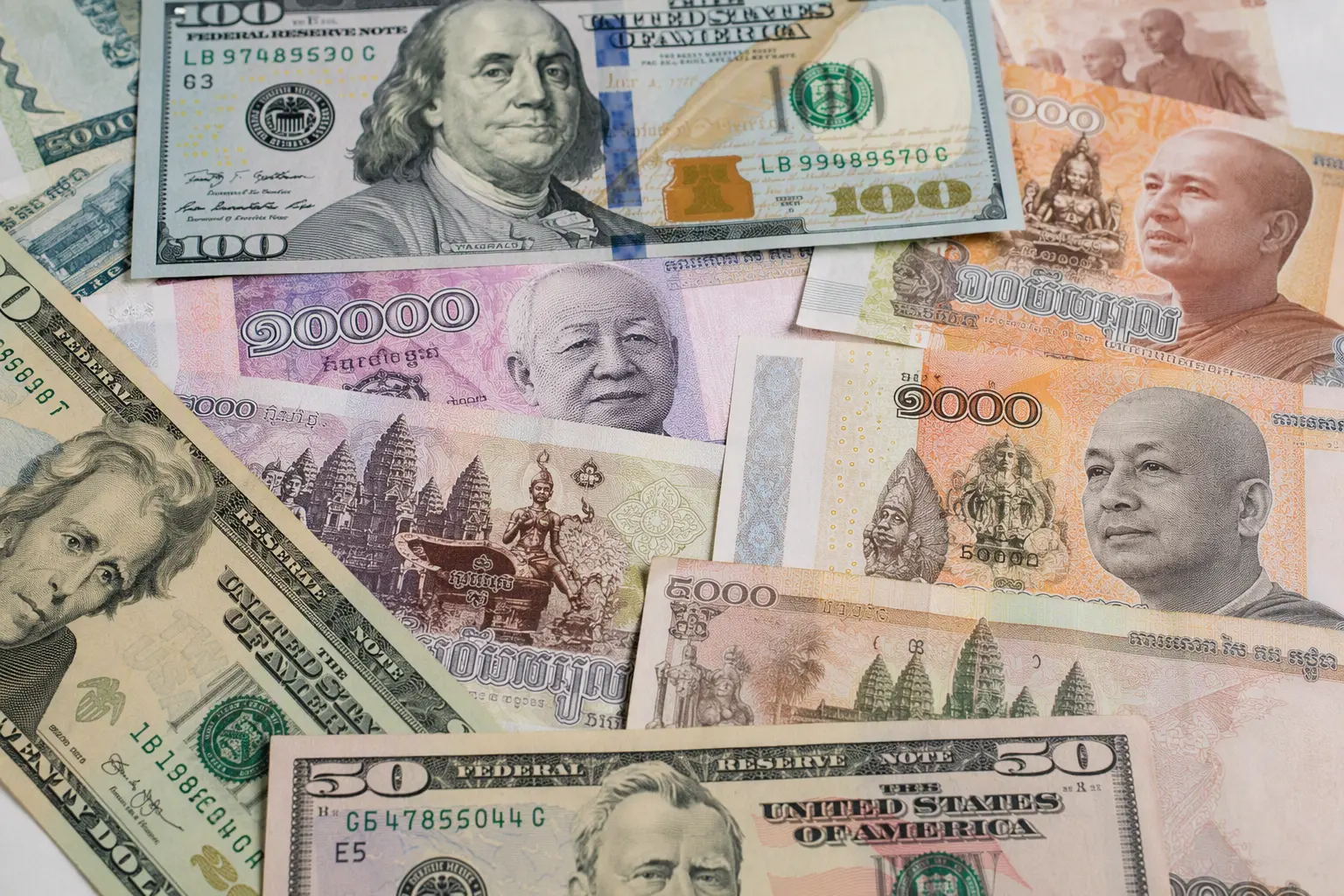
Before you even pack your bags, you must understand the most unique aspect of Cambodia’s economy: It operates on a dual-currency system.
Both the US Dollar (USD) and the Cambodian Riel (KHR) are used simultaneously in everyday transactions.
🔄 How the Exchange Rate Works
- The Standard Rate: $1 USD is approximately 4,000 to 4,100 KHR.
- How it works in practice: You will rarely need to officially “exchange” money at a bank to get Riel. You simply pay in Dollars and receive Riel as change, or vice versa.
- Example: A meal costs $5. You hand the vendor a $10 bill. They will hand you back a $1 bill and 16,000 Riel (which equals $4).
⚠️ Crucial Warning: The Condition of Your USD Bills
Cambodians are incredibly strict about the physical condition of US Dollar bills. If your USD bills are torn, heavily creased, marked with ink, or feature old designs, vendors and banks will refuse them.
- The Fix: Before leaving your home country, go to your bank and ask for crisp, brand-new, pristine US Dollar bills. Treat your USD cash like fragile glass while traveling.
💳 vs. 💵 Where to Use Cash vs. Card
While Siem Reap is modernizing rapidly, Cash is still King, especially when you leave the town center and enter the Angkor Archaeological Park.
💵 Where You MUST Use Cash (USD & Riel)
- Angkor Enterprise Ticket Office: While they have started accepting cards, the machines frequently go offline, and the morning queues are long. Cash is much faster.
- Tuk-Tuks & Taxis: Drivers do not carry card machines.
- Local Markets & Street Food: Psar Chas (Old Market), night markets, and food stalls are strictly cash.
- Temple Vendors: Anyone selling water, coconuts, souvenirs, or clothing inside the temple park.
- Small Cafes & Local Eateries: Most mom-and-pop shops only accept cash.
- Monks & Donations: Temple donations require cash (preferably small Riel notes).
- Tipping: Guides, drivers, and hotel staff expect cash tips.
💳 Where You CAN Use Credit/Debit Cards
- Mid-to-High-End Restaurants: Places on Pub Street, Riverfront, and upscale dining venues.
- Boutique Hotels & Resorts: For paying your room bill (though they may prefer cash for incidentals).
- Large Supermarkets: Lucky Mall, Aeon Mall, and Angkor Market.
- Tour Agencies & Ticketing Offices: For booking multi-day tours, bus tickets, or Apsara dinner shows.
- High-End Souvenir Boutiques: Shops selling silk, silver, and high-quality handicrafts.
💡 Pro-Tip: Always carry a mix of $1, $5, and $10 USD bills. Breaking a $50 or $100 bill at a street stall or with a tuk-tuk driver is nearly impossible, as they simply do not have the change.
🛕 The Temple Economy: Managing Money at Angkor Wat
The Angkor Archaeological Park is a massive 400-square-kilometer zone, and the financial infrastructure inside it is virtually non-existent. Here is how to handle your money during a temple day:
1. Buying Your Angkor Pass 🎟️
- Location: The official Angkor Enterprise Ticket Center (on the road to the park).
- Payment: They accept USD cash and major credit cards (Visa/Mastercard).
- Strategy: Buy your ticket the afternoon before your first sunrise visit (after 4:45 PM). The card machines are less likely to be overwhelmed, and you won’t hold up the 5:00 AM sunrise queue.
2. Food, Water, and Restrooms 🥥
- There are no ATMs inside the temple park.
- There are no card terminals at the local restaurants opposite Angkor Wat or Ta Prohm.
- Strategy: Withdraw enough cash in Siem Reap town the night before. Budget about $5–$10 for lunch, coconuts, and restroom fees (usually 2,000 Riel / $0.50).
3. Paying Your Guide and Driver 🛺
- If you hired a private guide or a tuk-tuk driver for the day, you pay them in USD cash at the end of the tour. Have the exact amount ready.
🏧 ATMs in Siem Reap: Everything You Need to Know
You will not run out of places to withdraw money in Siem Reap town, but you need to know how the system works to avoid exorbitant fees.
📍 Where to Find ATMs
- Abundant in Town: You will find ATMs on almost every corner near Pub Street, Sivutha Boulevard, and inside major shopping malls.
- Non-Existent in the Park: Do not expect to find an ATM near the temples.
- Airport: There are ATMs at Siem Reap-Angkor International Airport (SAI), but it’s better to withdraw a small amount there for your transfer and do the main withdrawal in town.
💰 ATM Fees and Limits
- Local Bank Fee: Cambodian banks charge a flat fee of $4 to $5 USD per transaction, regardless of how much you withdraw.
- Withdrawal Limits: Most ATMs allow you to withdraw up to $500 to $1,000 USD at a time (some ABA Bank or Canadia Bank ATMs allow up to $2,000).
- The Hack: To minimize the $5 fee, withdraw the maximum amount allowed in a single transaction. If your daily limit back home is low, call your bank before your trip to increase your international withdrawal limit.
🛡️ ATM Safety Tips
- Use Bank-Affiliated ATMs: Always use ATMs located inside a bank branch or in well-lit, secure areas like shopping malls. Avoid standalone ATMs on dark, quiet streets.
- Beware of Skimmers: Give the card slot a little wiggle before inserting your card. If it feels loose or bulky, use a different machine.
- Choose USD or KHR: The ATM screen will ask if you want your money dispensed in USD or KHR. Choose USD for your main travel funds, but maybe withdraw $20 worth of KHR for small street purchases.
- Decline the ATM’s Conversion Rate: If the ATM offers to do the conversion for you (Dynamic Currency Conversion), always decline. Let your home bank do the conversion; the ATM’s exchange rate is heavily marked up.
💱 Currency Exchange: Bringing Cash vs. Exchanging Locally
Should you bring a stack of USD from home, or bring your home currency and exchange it in Siem Reap?
✈️ Bringing USD from Home (Recommended)
- As mentioned, bring crisp, flawless US Dollar bills. This is the most widely accepted and hassle-free way to pay for major expenses (hotels, tours, Angkor tickets).
🏪 Exchanging Foreign Currency in Siem Reap
- If you bring Euros, British Pounds, Australian Dollars, or Thai Baht, you can easily exchange them in Siem Reap.
- Where: There are hundreds of licensed money exchange booths around Psar Chas (Old Market) and near the night markets.
- Fees: Unlike Western countries, exchange booths in Cambodia rarely charge a “commission fee.” They make their money on the spread (the difference between the buy and sell rate).
- The Golden Rule of Exchange: Never exchange money at the airport or your hotel; their rates are the worst. Walk into town, compare 2 or 3 booths, and hand over your cash.
- Count Your Money: Always count your Riel or USD before walking away from the counter.
🙏 Tipping Etiquette in Siem Reap
Tipping is not traditionally a Cambodian custom, but due to the heavy influence of tourism, it is now expected and deeply appreciated by service workers.
💵 How Much to Tip?
| Service | Suggested Tip (USD) | Notes |
|---|---|---|
| Tuk-Tuk Driver | $1 – $2 per day | Tip more if they provide cold water, wait patiently, and offer good route advice. |
| Private Tour Guide | $5 – $10 per day | Tip at the end of the tour. For multi-day tours, tip daily or a lump sum at the end. |
| Restaurants | 5% – 10% | Check the bill first. Many mid-range places add a 10% service charge. If they do, an extra tip is not required (but leaving loose change is nice). |
| Massage / Spa | $1 – $3 | Depending on the length and quality of the massage. |
| Hotel Housekeeping | $1 per day | Leave it on the pillow or desk with a clear note. |
| Monks / Pagodas | 2,000 – 5,000 Riel | Place the donation in the designated boxes. Do not hand cash directly to a monk (especially if you are a woman). |
🚫 The “No Coins” Rule
Cambodia does not use US coins. There are no pennies, nickels, dimes, or quarters in circulation. Furthermore, local banks and vendors cannot exchange foreign coins (like Euro cents or UK pence).
- Never tip in coins. It is useless to the recipient. Always tip in paper USD bills ($1, $5) or paper Riel notes.
📊 Daily Budget Cheat Sheet (Cash Planning)
How much cash should you withdraw from the ATM each day? Here is a realistic breakdown based on travel styles:
🎒 The Budget Backpacker ($20 – $30 / day)
- Cash needed: $15 – $20 USD
- Breakdown: Street food ($5), bicycle rental ($3), local market souvenirs ($2), water/snacks ($2), tuk-tuk share ($3), tips ($1).
- Note: This assumes you already paid for your hostel and Angkor Pass via card/online.
🧳 The Mid-Range Traveler ($50 – $80 / day)
- Cash needed: $30 – $50 USD
- Breakdown: Nice cafe breakfast ($5), sit-down lunch near temples ($10), iced coffees & coconuts ($5), private tuk-tuk ($15), guide tip ($5), evening cocktails & dinner ($20).
✨ The Luxury Traveler ($150+ / day)
- Cash needed: $40 – $60 USD
- Breakdown: You will use your card for high-end dinners, boutique shopping, and luxury spa treatments. Cash is only needed for generous tips ($20+), small artisan market purchases, and temple donations.
🛡️ Scams and Safety: Protecting Your Wallet
While Siem Reap is generally very safe regarding violent crime, petty financial scams can happen. Stay sharp with these tips:
1. The “Riel Confusion” Trick 🧠
Because Riel notes have many zeros (10,000, 50,000, 100,000), they all look similar to a tourist. A dishonest vendor might hand you 10,000 Riel ($2.50) as change instead of 50,000 Riel ($12.50).
- The Fix: Take a photo of the Riel notes on your phone on your first day to memorize the colors and numbers. Always count your change out loud.
2. The “Torn Bill” Swap 📄
When paying with a $10 or $20 bill, a shady vendor might quickly swap it under the counter with a torn or marked bill and hand it back to you, saying, “This bill is ripped, I cannot accept it. Give me another.” You just lost $20.
- The Fix: Keep your eye on your bill during the transaction. Memorize the serial number of large bills if you are paranoid, or simply stick to paying with $1, $5, and $10 bills.
3. The “Orphanage” or “School” Scam 🏫
You may be approached by tuk-tuk drivers or guides offering to take you to a “local orphanage” or “poor school” where you can donate money or buy overpriced supplies. Many of these are exploitative businesses that keep the children in poverty to solicit tourist cash.
- The Fix: Decline politely. If you want to help, donate directly to reputable, vetted NGOs in Siem Reap (like ConCERT or local reputable animal sanctuaries) via their official websites or offices.
4. Pickpockets in Crowds 🎒
The Angkor Night Market, Pub Street, and the narrow corridors of Angkor Wat during sunrise can get incredibly packed.
- The Fix: Wear a cross-body bag with zippers facing forward. Never keep your wallet in your back pocket. Use a hidden money belt for your backup cash and passport.
📱 Digital Wallets: Apple Pay, Google Pay, and QR Codes
- Apple Pay / Google Pay: Contactless NFC payments are very rare in Siem Reap. Do not rely on your smartwatch or phone to tap-and-pay.
- QR Codes (KHQR): You will see QR codes everywhere in Cambodia. Locals use an app called Bakong to scan and pay for everything, from a $1 coffee to a $500 hotel bill. However, this system is currently linked primarily to Cambodian and some regional bank accounts. As a short-term tourist, you likely will not be able to use KHQR. Stick to physical cash and credit cards.
❓ Frequently Asked Questions (FAQs)
Q: Do I need to declare my cash at Cambodian customs? A: By law, you must declare cash if you are carrying the equivalent of $10,000 USD or more upon entry or exit. For normal tourist amounts, you do not need to declare anything.
Q: Will my credit card work at the Angkor Wat ticket office? A: Yes, the main ticket center accepts Visa and Mastercard. However, the internet connection can be spotty, and the morning queues are long. Cash is highly recommended for speed.
Q: What happens if I run out of cash inside the temple park? A: You will have to rely on your tuk-tuk driver to lend you money (which is awkward), or you will have to cut your day short and ride back to Siem Reap town to find an ATM. Always overestimate your cash needs for the day.
Q: Can I pay for my hotel in Siem Reap using a credit card? A: Yes, almost all registered hotels, guesthouses, and hostels accept credit cards for room payments. However, they may add a 2% to 3% surcharge to cover the bank processing fee. Ask before you swipe!
Q: Is it better to use a debit card or a credit card at ATMs? A: Use a debit card specifically linked to a travel-friendly account (like Charles Schwab, Monzo, or Wise) that reimburses ATM fees. Using a credit card at an ATM will trigger a “Cash Advance” fee from your bank, which comes with massive interest rates.
✅ The Ultimate Siem Reap Money Checklist
Before you head out to explore the temples tomorrow, run through this quick checklist:
- I have a stack of crisp, unblemished $1, $5, and $10 USD bills.
- I have withdrawn enough cash for my Angkor Pass, food, and transport.
- I know the current exchange rate ($1 USD ≈ 4,000 KHR).
- I have separated my cash (some in my wallet, some hidden in my hotel safe).
- I have informed my home bank that I am traveling to Cambodia so they don’t block my card.
- I have a travel-friendly debit card to avoid massive ATM fees.
- I have small USD bills ready to tip my tuk-tuk driver and guide.
🌟 Final Thoughts
Managing money in Siem Reap doesn’t have to be a stressful math test. Once you get the hang of the dual-currency system and accept that cash is your best friend inside the temple park, you’ll navigate the markets and ruins like a seasoned pro.
By preparing your crisp USD bills, knowing where the ATMs are, and treating the local vendors with respect during transactions, you ensure that your focus remains exactly where it should be: on the breathtaking, ancient majesty of Angkor Wat.
Safe travels, and happy (budget-friendly) temple hopping! 🛕💸✨
📌 Found this financial guide helpful? Bookmark it for your Cambodia trip, share it with your travel companions, and make sure your wallet is ready for the wonders of Siem Reap!